The Craft Beer Beginner's Checklist: 12 Styles to Try Before You Call Yourself a Beer Geek
A practical checklist of 12 essential beer styles, with tasting cues and classic examples, plus simple...

Seasonal beer runs on a calendar that has nothing to do with the supermarket. Breweries rotate their tanks around harvest, weather and the way the light changes in the afternoon. The windows are short: a few weeks for fresh-hop ales, a couple of months for Oktoberfest lagers, and sometimes a single bottling run for anything that has spent time in a barrel.
Below are five seasonal releases worth hunting down this month, with notes on how they should taste, how to tell a good one from a lazy one, and where they tend to show up first. Treat the list less as a shopping script than as a set of clues: the best bottle is usually the one with a recent date, a story behind it, and a pour that tastes like it belongs to the current weather.
Fresh-hop beer, sometimes labeled wet-hop, is brewed with hops that go from bine to kettle within about a day, undried and still damp. That green material behaves differently in the kettle. Instead of the sharp, resinous bitterness of a standard pale ale, you get something rounder and more vegetal in the best sense: cut grass, green tea, fresh hay, melon rind, lemon zest, and a finish that fades rather than bites.
It is also the most perishable beer on the calendar. Fresh-hop character drops off within a few weeks of packaging, and plenty of the best examples never make it into bottles at all. Brewers often drive bins of hops straight from a farm to the brewhouse, sometimes within hours, and the resulting beer can taste almost like a different category: softer, juicier, and more delicate than the standard IPA or pale ale lineup.
Drink it now. This is not a beer to save for Thanksgiving; by then it will taste like a decent pale ale and nothing more. If you find a fresh-hop release you love, go back for a second four-pack within the week. That is not greed; it is quality control.
Two different beers share the name. The one poured in Munich is Festbier — paler, drier, deceptively strong. The amber, toasty beer most of us mean is Märzen, brewed in spring and lagered through summer in cold cellars. Both are at their peak right now, and both reward a brewer who understands that lagering is not a pause button but a slow refinement.
A good version tastes like fresh bread crust and honey, with a light toasted sweetness and a clean, faintly herbal finish. Body should be medium, carbonation brisk, and the last sip should be dry. If it finishes syrupy, the brewer leaned on caramel malt to cover something up. If it tastes like a pale ale with the hops turned down, you are probably drinking a Festbier that has lost its malt backbone.
German imports land in early autumn and then sit on warm shelves longer than anyone would like, so check the freshness code before buying. Bottles in green or clear glass are prone to light damage, which shows up as a skunky aroma; brown glass or cans are safer. American craft versions often sell out before the festival ends, particularly the ones backed by a genuine lagering program. If you want a straight answer, ask a bartender which local Oktoberfest they would drink on their own time.
For food, keep it simple: pretzels, roast chicken, sausage, sharp cheese, and anything with a little salt and fat. The beer is built to cut through that kind of plate without shouting over it.
The pumpkin aisle is a minefield, but the good bottles are easy to spot once you know the split. There are beers brewed with actual roasted squash, and there are amber ales with a pumpkin pie spice blend added. The first can be excellent. The second is a spice delivery vehicle — fine on a cold night, rarely good with food.
What you want: roast squash, sweet potato, graham cracker, brown sugar, with cinnamon, ginger and clove in the background. If nutmeg and clove hit first and stay, you have a spice beer. Serve either slightly warmer than fridge temperature, around 50°F, and split the bottle, because most are heavier than the first half suggests. Keep a plain lager nearby as a palate reset between pours.
One more test: read the ingredient list. If the brewery names the squash variety — kabocha, butternut, sugar pumpkin — that is usually a sign they treated it as an ingredient rather than a theme. If the label only promises “pumpkin pie in a glass,” expect dessert, not dinner.
This is the quiet corner of the autumn lineup, and often the most drinkable. Expect toasted walnut, cocoa nib, dried fig, a little molasses, and a dry finish that keeps you going back. When coffee is involved, many breweries partner with a local roaster and add cold brew at packaging, so the coffee stays bright instead of turning harsh.
Ask which roast went in. A lighter, fruitier coffee reads very differently from a heavy dark roast. Serve at cellar temperature, roughly 50 to 55°F; straight from a cold fridge you will miss most of what makes these beers worth buying. These are also the most food-friendly beers on this list: try one with chili, roast pork, aged cheddar, or a slice of gingerbread.
If you see a brown ale or coffee porter on nitro, give it a try. The softer carbonation can make the roast character feel creamier and more integrated, though it also mutes some of the aroma. Cask versions, when you can find them, tend to be lower in carbonation and served warmer, which pushes the malt forward and the coffee into the background. Neither is better; they are simply different lenses on the same beer.
These start appearing now and keep coming through December, usually in 500ml or 750ml bottles and often in limited counts. Bourbon and rye barrels contribute vanilla, coconut, toasted oak, dried cherry and caramel, layered over a strong base beer that generally lands somewhere between 9% and 12% alcohol. A 750ml bottle is three servings, not one.
Buy two if you can. Open one now and hold the other for the coldest night of the year, or for a gathering where a single bottle can be shared slowly. Barrel-aged beers change in the bottle: the oak integrates, the alcohol softens, and the dried-fruit notes often deepen. If the first bottle tastes hot or disjointed, the second may be better in six months.
Check the barrel type and the age statement. A beer aged in fresh bourbon barrels for a year will taste very different from one that spent three months in a used barrel. Neither is automatically better, but the details tell you what kind of ride you are in for.
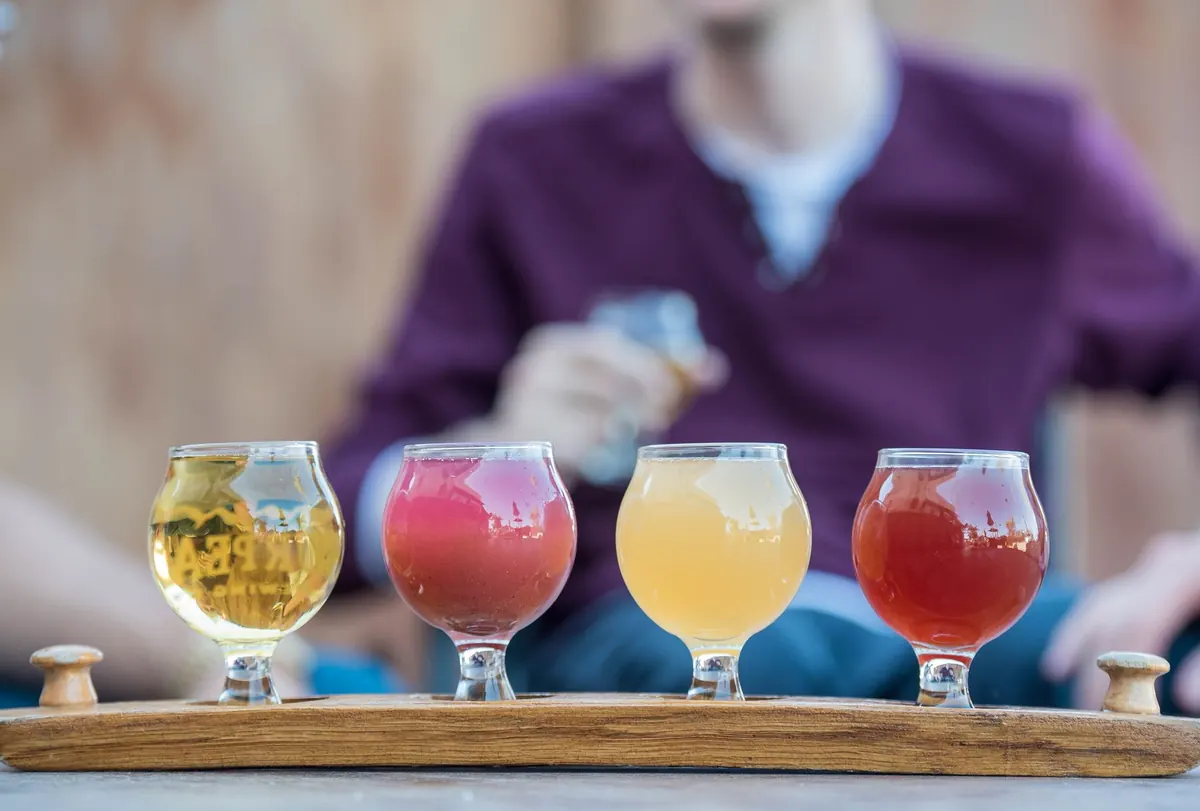
You do not need five full pours to compare these beers. A tasting flight of three-ounce pours is enough, and it keeps the evening from turning into a nap. Start with the lightest and most delicate beer, then move toward the darkest and strongest. A practical order: fresh-hop pale ale, Oktoberfest lager, pumpkin or squash ale, brown ale or coffee porter, and finally the barrel-aged warmer.
Provide water and plain crackers between pours. Keep the stronger beers at cellar temperature and the lagers a touch cooler. If you are sharing bottles, pour small amounts and revisit each one after ten minutes; these beers change as they warm, and the second sip is often more informative than the first.
Seasonal beer is not automatically better because it is seasonal. A tired pumpkin ale in August, a fresh-hop bottle from last year, or an Oktoberfest that has been sitting in a sunny window are all disappointments waiting to happen. Check dates when you can, buy from shops that move stock quickly, and store bottles upright in a cool, dark place.
If a beer tastes dull, papery, or sharply bitter in a way that does not match the style, it may simply be old. If it tastes like burnt coffee or harsh spice, it may be a recipe problem. Either way, you do not have to finish it. The best seasonal drinking is about catching a beer in its narrow window, when the brewing calendar, the weather, and your own appetite happen to line up.
That window is different for every style, which is why the next few weeks matter. Buy the fresh-hop ale first, drink the Oktoberfest while the leaves are still turning, and save the barrel-aged bottle for the night when the forecast finally gives you a reason.
Photo: Darlene Alderson / Pexels
A practical checklist of 12 essential beer styles, with tasting cues and classic examples, plus simple...
Five non-alcoholic beers ranked on flavor, body and sessionability, plus serving tips to get the most out...
Seven affordable, food-friendly lagers built for hot afternoons, plus pairing notes and serving tips so...